
Ancient grain. Slower digestion. Better balance. The quiet comeback of Khapli wheat
29 May 2026 · Team Grainlly
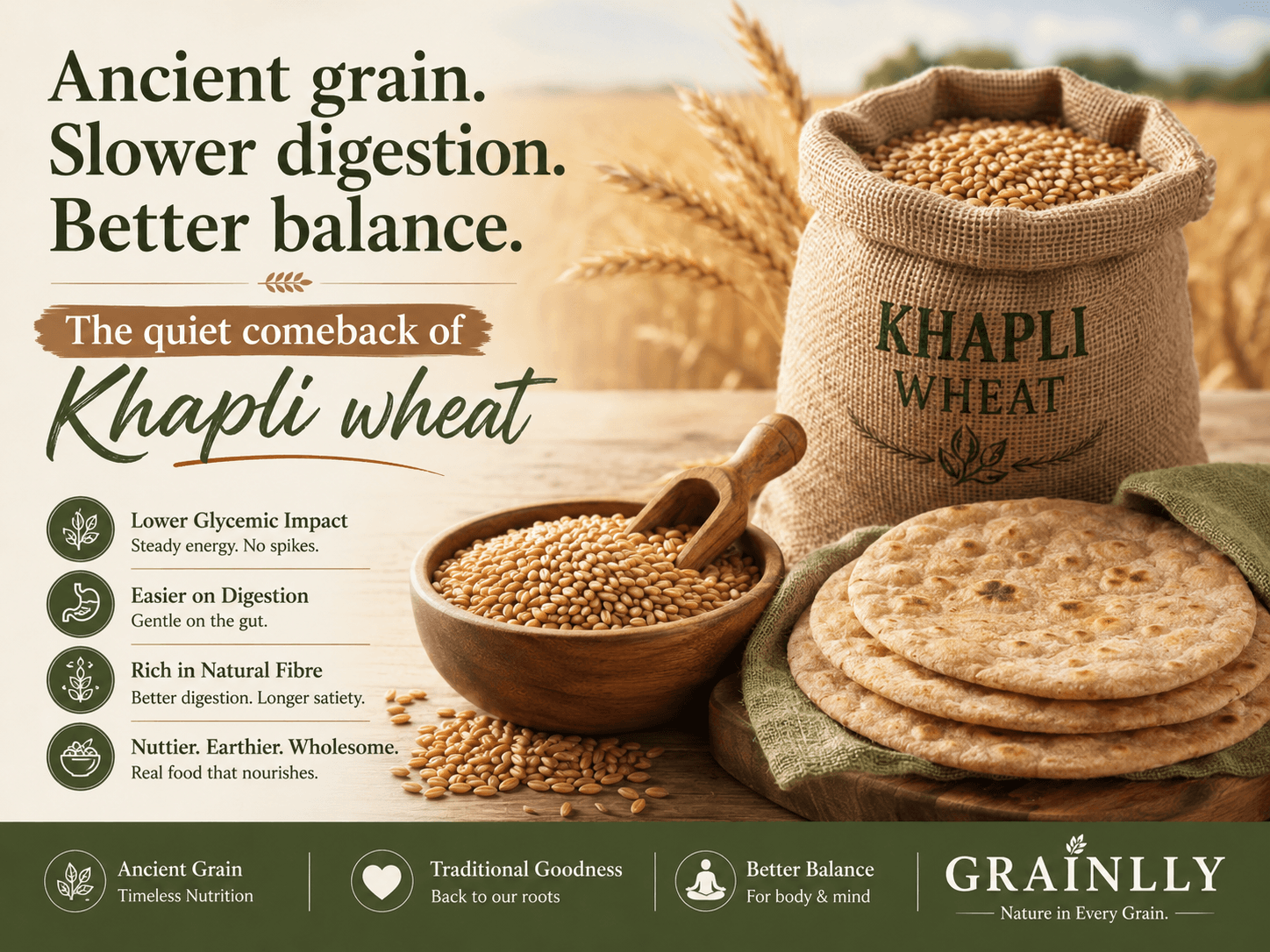
For years, wheat was never really questioned.
It was a part of everyday life - soft rotis at lunch, warm phulkas at dinner, homemade comfort that felt natural to the body. People ate wheat daily without obsessing over bloating, sugar spikes, or digestion.
But slowly, something changed.
Modern lifestyles made us believe wheat itself was the problem. People started feeling constantly heavy after meals, struggling with energy crashes, cravings, poor gut health, and rising blood sugar issues. The answer seemed simple - “avoid carbs” or “stop eating wheat.” But what if the issue wasn’t wheat entirely? What if the issue was the kind of wheat we slowly moved away from?
That’s where Khapli wheat comes in.
Khapli wheat, also known as Emmer wheat, is one of the oldest varieties of wheat grown in India. Unlike modern hybrid wheat that has been modified over time for higher production and softer texture, Khapli has remained closer to its original form. It grows slowly, has a naturally rustic texture, and carries a nutritional profile that feels far more balanced for the body.
What makes Khapli stand out is not a marketing trend - it’s the way it behaves inside the body.
One of the biggest reasons people are shifting towards Khapli wheat is its lower glycemic impact compared to regular refined or modern wheat varieties. In simpler words, it releases energy more slowly. Instead of causing sudden sugar spikes and crashes, it gives a steadier release of glucose, helping with better energy levels, reduced cravings, and improved satiety. For people dealing with insulin resistance, weight management, or frequent hunger, this makes a noticeable difference.
Khapli wheat is also naturally richer in fibre. And fibre changes everything.
It supports better digestion, helps keep you fuller for longer, and slows down the absorption of carbohydrates. Many people who experience heaviness or discomfort after regular wheat often find Khapli easier on the stomach. Not because it is gluten-free, it is not - but because its gluten structure is different and generally less aggressively modified than modern wheat varieties.
The taste is different too.
Slightly nuttier, earthier, more wholesome. Rotis made from Khapli wheat feel more satisfying, almost like real food that nourishes rather than just fills.
There’s also something deeper about choosing grains like Khapli. It reconnects us with traditional eating patterns that focused more on quality than convenience. Before food became highly processed and engineered for shelf life, grains were seasonal, slower growing, and naturally nutrient dense. Khapli is a reminder of that older relationship with food - simpler, more mindful, and more aligned with how our bodies were meant to eat.
Of course, no single grain is a miracle food. Health will always depend on overall lifestyle, movement, sleep, stress, and eating habits. But small changes matter. And changing the base of what we eat every single day - something as basic as our wheat - can have a surprisingly powerful impact over time.
Maybe the answer was never about removing wheat completely.
Maybe it was about going back to the kind of wheat our bodies understood better in the first place.
GRAINLLY— Nature in Every Grain.